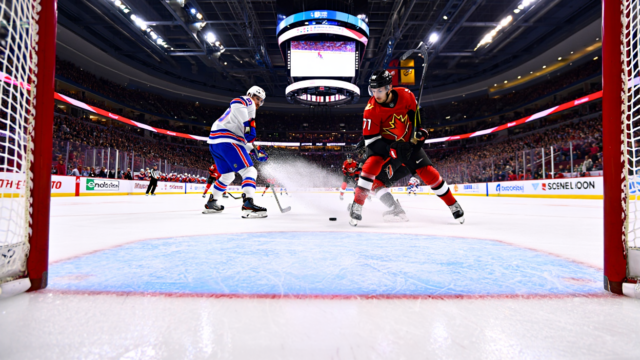
Artificial intelligence transforms raw hockey data into actionable betting picks by processing variables that human analysts struggle to weight consistently. Mathematical prediction models for hockey examine team form across recent matches, head-to-head records, player availability, home-and-away splits, and scoring patterns in specific periods. The best AI systems don’t guess-they calculate probability shifts when variables change.
Canadian bettors have access to several AI-powered prediction platforms that analyze NHL and international tournaments alongside European leagues like the KHL. These systems ingest thousands of data points per game: shooting efficiency, defensive metrics, goaltender performance against similar opponents, travel fatigue, and rest days between matches. A model might assign 62% probability to Team A winning, which translates to specific odds ratios for betting decisions.
Core Variables AI Analyzes Before Game Time
Recent form carries substantial weight in AI models because hockey momentum compounds quickly. A team winning four of five games builds roster confidence and typically refines tactical execution, while a squad on a two-game losing streak may show defensive hesitation. AI prediction for hockey today starts by examining the past 10–15 games rather than entire season records, since injuries and lineup changes shift performance baselines dramatically.
Head-to-head records provide matchup-specific insights that season-wide statistics mask. One team might struggle against a particular opponent’s forecheck intensity or face systematic challenges against a specific goaltending style. The algorithm captures these historical tendencies and adjusts projections when identical rosters meet again.
Home-and-away performance splits reveal genuine venue effects beyond crowd noise. Some teams shoot 8–10% more efficiently at their arena due to ice conditions, travel schedules that precede road games, or roster composition suited to defensive play on unfamiliar ice. AI models separate home bias from actual performance difference.
Period-by-period scoring patterns matter because betting markets often offer separate wagers on first-period, second-period, and third-period outcomes. Teams with strong defensive systems may concede fewer first-period goals but accumulate chances in the second period when opponents chase leads. Mathematical prediction for hockey incorporates these temporal patterns into period-specific picks.
Bet Types Where AI Excels
Match outcome predictions represent the simplest application but require the most accurate probability calibration. An AI system claiming 68% confidence in Team A winning must deliver approximately 68 winning bets when making 100 such predictions. Overconfident models fail because they assign extreme probabilities (95%+) to outcomes with inherent variance.
Over-under total goals thrive under AI analysis because scoring follows more predictable distributions than directional outcomes. Two high-pace teams averaging 3.2 and 3.0 goals per game respectively don’t guarantee exactly 6–7 combined goals, but the probability density clusters predictably. AI calculates whether a listed total reflects true likelihood or exploitable bias in market pricing.
Both teams to score generates strong AI predictions when rosters contain specific player types. Teams featuring aggressive power-play units and active penalty-killing create conditions where both sides score, especially over 60 minutes. Models train on historical data showing which team combinations produce this outcome consistently.
Handicap bets require AI to estimate margin-of-victory distributions, which vary by team quality, venue, and matchup. A five-goal gap between rosters demands different probability assessment than a two-goal separation. Sophisticated models calculate the entire victory-margin distribution rather than simply predicting win probability.
AI Predictions for Today’s Hockey Games
Current NHL matchups benefit from continuous AI model updates as lineups solidify and pre-game skate reports emerge. When a star forward returns from injury or a starting goaltender needs rest, AI systems recalibrate odds within hours. The mathematical prediction for hockey today incorporates these late-breaking roster decisions that sportsbook odds occasionally miss in initial releases.
A specific example: if Detroit enters today’s game against Dallas with four consecutive victories (50% win rate historically) versus Dallas’s 80% performance in recent contests, the raw quality gap favors Dallas. However, AI examines whether Detroit’s four wins came against playoff-contending teams or struggling rosters, whether Dallas’s 80% rate occurred at home or on the road, and whether head-to-head records contradict the season trends. Detroit leading historical head-to-head matchups 6–4 against Dallas introduces friction in the model-suggesting Dallas’s superior recent form may not predict today’s outcome accurately.
Philadelphia visiting Colorado presents a different analytical challenge. Philadelphia won four of five recent games with visible offensive punch, creating a stronger case for a Philadelphia win (F1 in betting terminology). Colorado on its home ice typically plays a different system than road performances, but the AI must determine whether Colorado’s home record reflects genuine venue strength or sample-size noise from fewer games. The mathematical prediction for hockey today flags Philadelphia as value because their recent form outpaces Colorado’s home-ice advantage statistically.
World Championship Predictions and Tournament Dynamics
Hockey world championships demand different AI approaches than regular season games because international rosters assemble briefly, players operate under different systems than club environments, and tournament pressure creates emotional variables largely absent from regular seasons. USA versus Finland represents a classic matchup where predictive models must account for recent tournament performance rather than club-season metrics.
Finland’s recent results-losses to Czechia (8–6) and Switzerland (1–6)-indicate defensive vulnerabilities that USA’s offensive system can exploit. USA lost to Canada and Slovakia, showing weaker top-tier performance but potentially superior conditioning for tournament play. The AI prediction for hockey world championship weighs tournament-specific factors: roster depth beyond star players, goaltender adaptation speed to international rink dimensions, and penalty-kill execution against diverse offensive styles.
USA carries predictive advantage based on recent form against comparable opponents, but the margin remains narrow in tournament hockey where single elimination or round-robin tiebreakers create volatility. Mathematical models assign USA approximately 55–60% win probability while recognizing substantial uncertainty inherent to international competition.
Why Canadian Bettors Should Question AI Consensus
AI prediction for hockey systems excel at identifying mispricings when public betting leans toward recency bias or narrative preferences. Canadian sportsbooks receive heavy action on hometown rosters and major international tournaments, creating situations where odds shift away from true probability. An AI system identifying a 65% objective probability for outcome X while Canadian books price it at 1.45 (69% implied probability) suggests value exists for contrarian bettors.
However, AI systems trained on historical data sometimes miss structural changes. A team acquiring a new head coach mid-season operates under different tactical frameworks than historical patterns suggest. New goaltenders require acclimation periods that generic models underweight. These limitations mean successful bettors combine AI picks with manual verification-confirming that recent form, roster changes, and tactical shifts align with algorithmic recommendations.
Parlay betting is another area where AI predictions prove especially useful. Since hockey matches contain multiple independent outcome variables (match winner, total goals, period scores, both teams to score), correlation patterns AI detects across these variables become particularly valuable in parlays. A system identifying that high-scoring teams also tend to allow more goals in specific periods can construct parlays with positive expected value across multiple betting types simultaneously.
Practical Steps for Implementing AI Hockey Predictions
Start by tracking AI predictions against actual outcomes across 20–30 games before placing substantial wagers. Document the confidence levels assigned to picks-a system claiming 72% confidence should win approximately 72 of every 100 similar predictions. If a platform’s actual win rate matches stated confidence, the model demonstrates calibration accuracy.
Compare multiple AI systems rather than relying on single algorithms. Different models weight variables distinctly, and consensus among independent systems strengthens conviction. When two separate AI prediction for hockey platforms both identify the same pick with high confidence but different reasoning chains, the pick gains credibility beyond single-source reliance.
Monitor sportsbook pricing for mispricings that AI identifies. If an AI system calculates 60% probability for outcome X but Canadian books offer 2.20 odds (45% implied), the edge justifies wagering. These pricing gaps close quickly in liquid markets, requiring speed of execution.
Bankroll management remains essential because even accurate AI systems encounter losing streaks. Variance in hockey allows talented teams to lose to inferior rosters-that’s inherent to the sport, not model failure. Successful bettors size wagers such that 5–8 consecutive losses won’t eliminate their capital, preserving the ability to capitalize on long-term positive expected value.