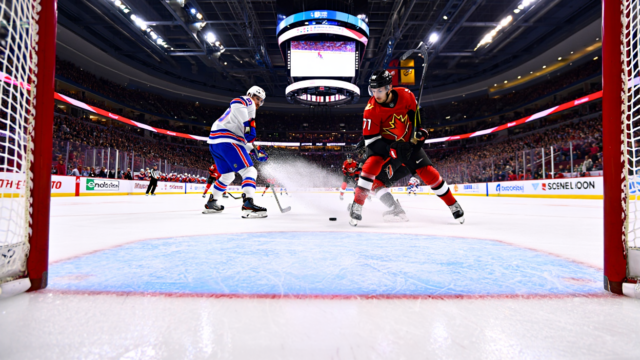
A total in hockey betting is a wager on the combined number of goals scored by both teams in a game, regardless of which team wins. The sportsbook sets a line-say 5.5 goals-and you bet whether the final score will go over or under that number. If the game ends 3-2, the total is 5 goals, which lands under 5.5. A 3-3 tie means 6 goals, which clears the over.
This bet type differs fundamentally from picking a winner. You don’t care if your favorite team loses by 10 goals, as long as the goal count matches your prediction. Many Canadian bettors find totals appealing because they focus on game pace and offensive output rather than team strength.
How Totals Work in Canadian Sportsbooks
Canadian regulated sportsbooks display totals with decimal lines like 5.5, 6.0, or 6.5 goals. When the line sits at a whole number such as 6.0, a final score of exactly 6 goals results in a push, meaning your bet is refunded. This rarely happens because most books use half-point increments (5.5, 6.5, 7.5) to prevent pushes.
The odds attached to each side vary. An over at -110 means you risk $110 to win $100. An under might carry different odds depending on whether the line favors one direction. Sportsbooks adjust these numbers based on sharp action and public betting patterns. If heavy money lands on the over, the book might increase under odds or lower the total line slightly to balance exposure.
Overtime and shootouts count as standard play. If a game goes to overtime and ends 3-2, that’s still 5 total goals. The shootout itself doesn’t add goals to the tally, so it affects which side wins the bet but not the total count.
Factors That Move Hockey Totals
Injuries to star players shift totals more than most other variables. When a top scorer sits out, expected goals per game drop noticeably. The Vegas Golden Knights’ total might drop a full goal if an elite forward enters protocols or surgery.
Back-to-back games compress totals because fatigued teams play tighter, more defensive hockey. A team playing its second game in as many nights typically generates fewer scoring chances. Weather affects travel schedules and player fatigue in unpredictable ways, especially during February and March when Canadian teams face long road stretches.
Home ice provides roughly a 10-15% edge in goal differential for most NHL teams. Home teams shoot more, apply sustained pressure, and benefit from crowd noise affecting communication. A total set at 6.0 for a neutral site might shift to 5.5 if played in an arena where the home team dominates possession.
Goalie performance creates asymmetry in total movement. If a net-minder returns after missing games due to injury, or faces a team missing its backup, totals shift accordingly. A hot goalie on a cold streak still affects sharp bettors’ models.
Reading Line Movement
Sportsbooks open hockey totals based on preseason models and historical matchups. Within hours, sharp bettors place large wagers that push lines toward their predictions. You’ll see totals move 0.5 or 1.0 goals in either direction before game time.
Movement typically indicates where sharp money flows. If a total opens at 6.5 and closes at 6.0, it signals that professionals expect lower scoring. Opening line totals represent the book’s best estimate; closing lines reflect where the market finally settled after heavy action.
Compare lines across different Canadian platforms. Bet365, FanDuel, DraftKings, and Kindred Group (Unibet) sometimes differ by 0.5 goals or in odds pricing. A total at 6.0 on one platform and 5.5 on another represents genuine disagreement about expected scoring.
Strategies for Betting Totals
Successful total bettors study team pace metrics. Teams averaging 2.8 goals per game for and 2.5 against produce different expected totals than squads with 3.2 for and 3.1 against. Keep a simple spreadsheet tracking each team’s last 10 games, factoring in home/away splits.
Matchup analysis matters more than overall records. The Edmonton Oilers’ high-octane offense faces the Ottawa Senators’ porous defense-expect the over to land. Meanwhile, Toronto Maple Leafs against Vegas Golden Knights features two solid defensive systems, suggesting an under lean.
Line shopping for half-point differences pays dividends over a season. Betting the over at 5.5 instead of 6.0 costs you little in juice but wins more often. Over a hundred bets, those extra half-goals add profitable years to your record.
Avoid betting totals for teams playing their fourth game in six nights without meaningful rest. Fatigue flattens scoring unless one side holds a massive talent gap. Instead, target games between well-rested squads where pace naturally accelerates.
Common Mistakes Canadian Bettors Make
Assuming higher-seeded teams will produce higher-scoring games fails because playoff positioning reflects defensive depth, not necessarily scoring volume. A third-place team in a strong division might outscore a division leader by 20% over a season.
Ignoring special teams metrics leaves money on the table. Teams with top-five power plays and strong penalty kills create fundamentally different scoring environments. A team with a 25% power play and 80% penalty kill drives up totals; one with 15% and 75% suppresses them.
Placing totals bets without checking whether either goalie is making their first or second consecutive start compounds problems. A backup net-minder often lets in softer goals, inflating totals compared to the starter’s typical performance.
Betting totals without considering weather conditions in Canadian winter climates makes little sense. Wind-driven snow at outdoor rinks (if any special games occur) or even travel delays from storms affect team preparation and scoring output.
Finding Value in Totals
Value emerges when your expected total differs from the sportsbook’s offered line. If you project 5.8 goals based on matchup analysis but the book offers 6.0, the under holds value. Conversely, if you forecast 6.2 and see 6.0, the over offers positive expected value.
Track your projections against closing totals for several months. If your models consistently predict 0.4 goals higher than market consensus, you’ve found an edge. Quantifying this edge lets you calculate long-term profitability.
Teams in transition periods-early-season openers before rhythm develops, mid-season lineup changes, or late-season desperation-create forecast uncertainty. When uncertainty rises, sportsbook pricing widens, and patient bettors find dislocations between fair odds and offered lines.
Live totals offer opportunities that pregame lines cannot. As a game unfolds with one team dominating play but trailing 1-0, the remaining total might price at 2.5 goals-a number suggesting higher scoring than early phases indicated. If you see predictable patterns in the game state, live totals reward quick decision-making.
Tools and Resources for Canadian Bettors
Natural Stat Trick and Hockey Stat Trends provide advanced metrics on offensive and defensive pressure. Expected goals (xG) models show which teams generate high-quality chances. Comparing xG per game to actual goal totals reveals whether teams outperform or underperform expectations.
Social media hockey analytics accounts post pregame models with projected totals. These predictions, though imperfect, highlight areas where public opinion might diverge from sharps’ expectations. Following these conversations helps calibrate your personal models.
Canadian provincial sportsbooks like Loto-Quebec (Mise-o-jeu), Ontario Lottery and Gaming (OLG), and British Columbia Lottery Corporation (PlayNow) offer their own total lines. Comparing these government-run books against offshore licensed sites occasionally reveals gaps that Canadian bettors can exploit.
Legal Landscape for Hockey Totals in Canada
As of 2024, most Canadian provinces allow single-game sports betting through licensed operators. British Columbia, Ontario, and Quebec lead regulatory adoption. Ensure your chosen sportsbook holds proper licensing from provincial gaming authorities, not just federal permission.
The Alcohol and Gaming Commission of Ontario (AGCO) regulates major operators in Canada’s largest sports betting market. Licensed platforms must display responsible gambling tools and fund addiction treatment. Betting outside this framework carries legal risk.
Tax implications differ by province. Winnings from legal sportsbooks aren’t typically taxed as income for individual bettors in Canada, unlike the United States. Confirm your province’s specific rules before assuming tax-free treatment.